Course Creator Disappeared After Payment? What to Do Before Evidence Vanishes

If the portal shuts down after payment, capture the failure today. A vanished support email is not proof of criminal intent on its own, but dates, receipts and repeated non-delivery matter. The FTC recommends contacting the company you paid through immediately if you were scammed; the Canadian Anti-Fraud Centre recommends contacting your financial institution and local police. FTC: after a scam↗ · CAFC: victim steps↗
Before you act#
These articles address consumer purchases in the United States and Canada; they are not a single North American legal regime. In Canada, provincial or territorial contract remedies vary; Ontario examples are labelled. In the United States, state laws and the facts of the transaction may add or change remedies. A report to a regulator is not an individual refund order. If you bought a course primarily for an existing business, consumer-law coverage may be different. Check your agreement and applicable local law; seek legal advice for a material loss.
Save the disappearing evidence#
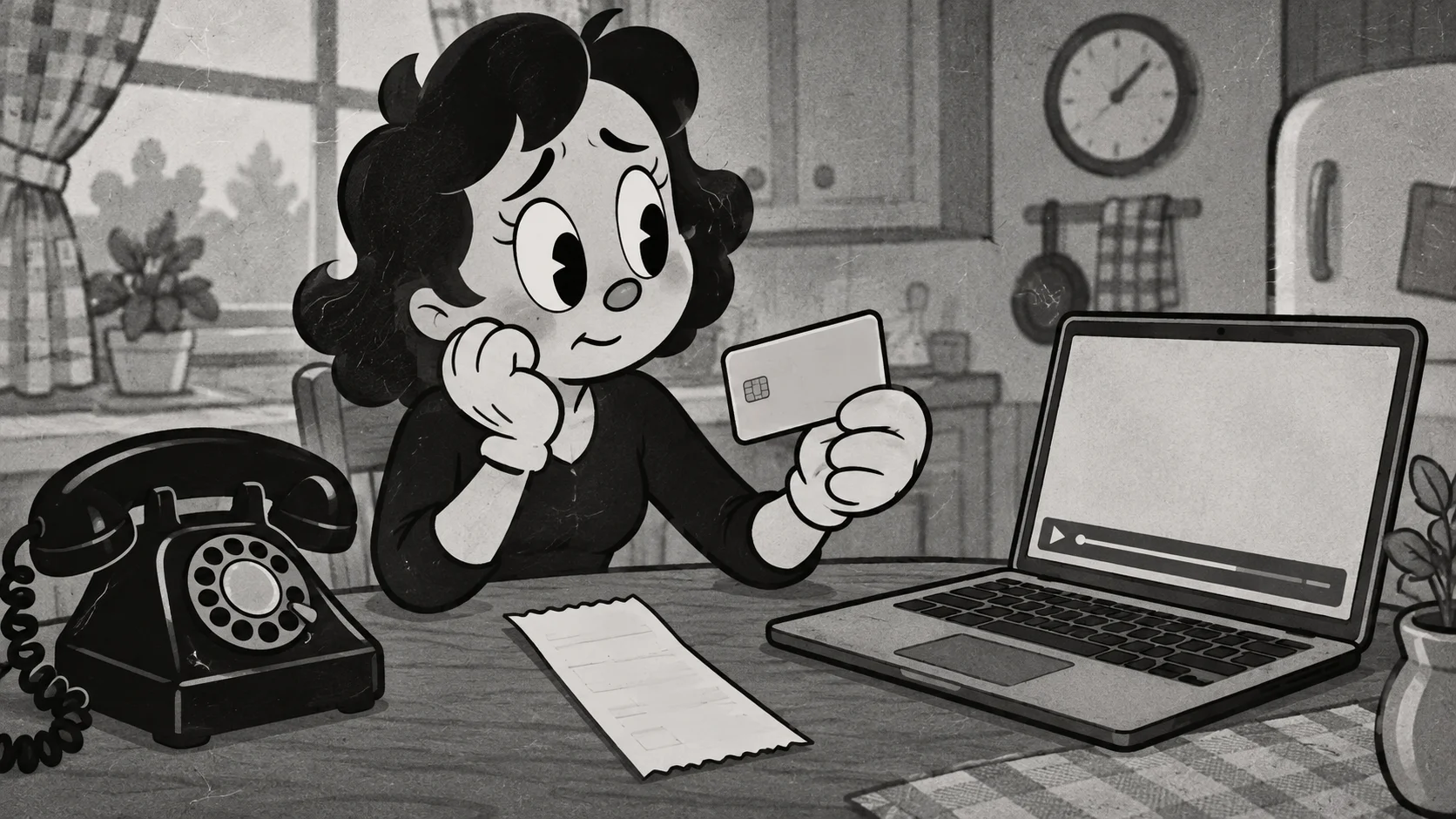
Archive the sales URL, channel handle, order confirmation, seller name on the statement, payment method, scheduled access period, portal error, bounced email and attempted support contacts. Make a dated timeline, keeping originals unchanged.
Choose the payment route#
Recovery depends on method and timing; never promise that a bank can recall a transfer.
Report suspected fraud where you live#
U.S. victims can use FTC ReportFraud↗ and contact local law enforcement for suspected crime. Canadian victims can use CAFC reporting↗ and local police; the CAFC says victims should report to police as soon as possible. For a Canadian complaint about a bank’s response, use the bank complaint route↗.
Do not confuse insolvency with deception#
A business shutdown can be a contract problem, a solvency problem, or suspected fraud. Describe facts instead of asserting the creator planned to steal your money. If the seller reappears, send a written demand for access or repayment while preserving the earlier silence.
Frequently asked questions#
▪Does a police report automatically freeze the account?
No. Ask your financial institution what steps are available; whether funds can be frozen or recovered depends on the facts and applicable rules.
▪Do I need a seller’s personal address?
Start with the company name, transaction descriptor, website, email, account identifiers and payment record. Do not publish private addresses.
▪Should I pay a “recovery expert”?
Be cautious. Verify any agency or refund program independently and do not pay an upfront fee on the promise of guaranteed recovery.
Your next move#
Take screenshots of the error and seller identity; call your payment provider using the number on your statement.
Official sources#
- FTC: what to do if scammed↗
- CAFC: what fraud victims should do↗
- CAFC: how to report fraud↗
- FCAC: bank complaint route↗
**Editorial note:** Any scenario labelled illustrative is fictional. Do not imply that the named agencies investigated the hypothetical seller or that a refund is guaranteed.
Does a police report automatically freeze the account?▼
No. Ask your financial institution what steps are available; whether funds can be frozen or recovered depends on the facts and applicable rules.
Do I need a seller’s personal address?▼
Start with the company name, transaction descriptor, website, email, account identifiers and payment record. Do not publish private addresses.
Should I pay a “recovery expert”?▼
Be cautious. Verify any agency or refund program independently and do not pay an upfront fee on the promise of guaranteed recovery.